
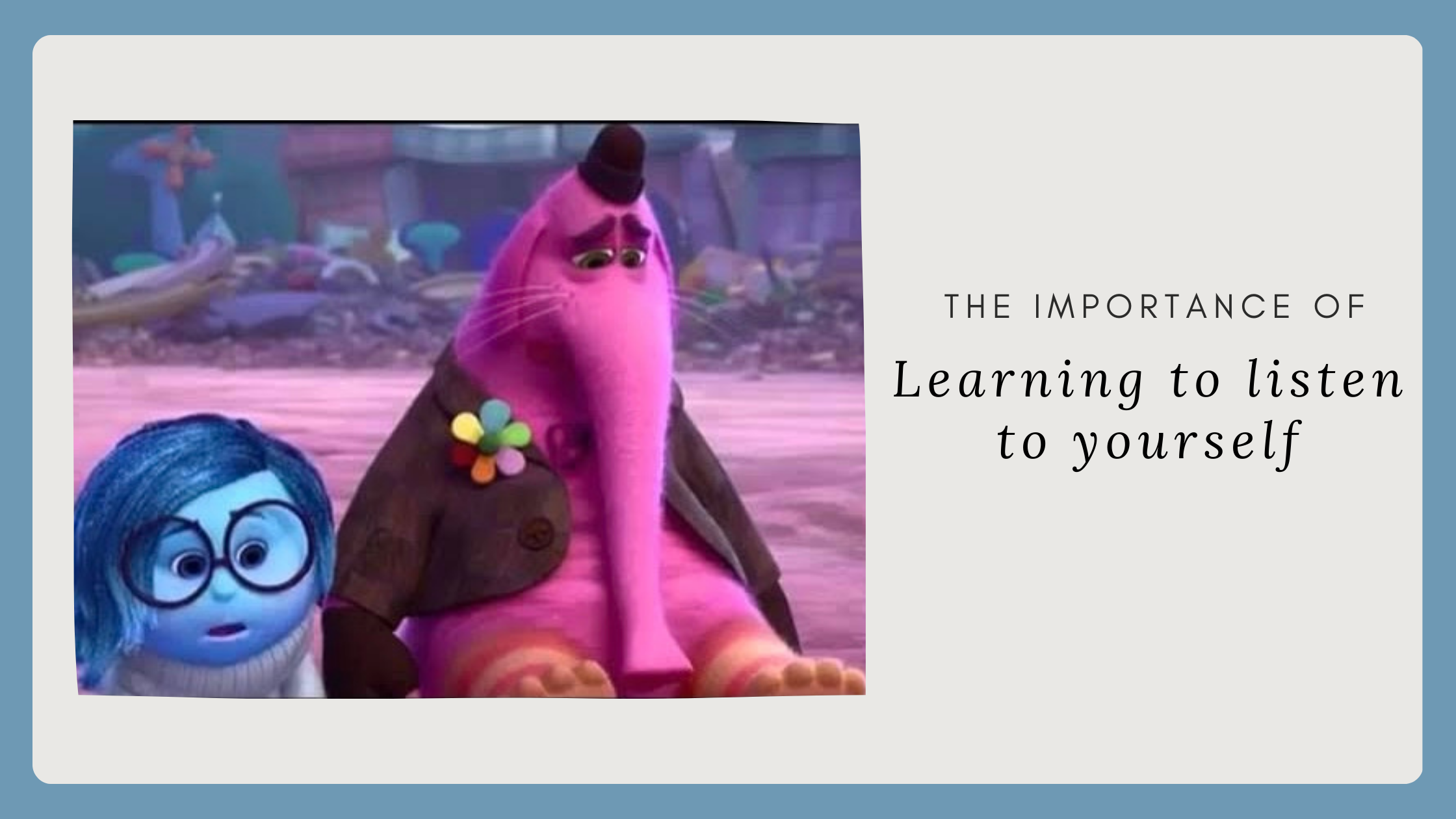
There is a scene in Inside Out that lingers long after the credits roll because of how quietly and accurately it captures something many of us struggle to put into words.
Bing Bong, Riley’s imaginary friend, has just realised that something precious has been taken from him. His rocket, the symbol of his connection with Riley, is gone, and the loss lands with a weight that feels surprisingly real. He crumples under it, unable to move forward.
Joy does what Joy does best, and yes, I’m prone to this behaviour too. She jumps in with enthusiasm, distraction, and encouragement, offering solutions and suggestions, to get him back on track. Everything she says is well-intended, kind, and energetic, and yet none of it touches the grief in front of her.
Then Sadness sits down beside him.
She doesn’t rush, analyse or offer a way out. She simply joins him where he is, shoulder to shoulder, and names what is true. Something he loved is gone.
As you watch this moment unfold on the screen, it becomes almost impossible not to feel the shift. There is a quiet but unmistakable change in the energy of the scene, a sense that something real has just happened. Without fanfare or explanation, you are shown what connection actually looks like, and it is striking how little is required for it to take hold.
What this scene shows us about empathy
What makes this scene so powerful is how little happens on the surface. There is no dramatic intervention, clever insight, or fixing of the problem. Sadness shows simply presence, truth, and shared experience. That’s it.
She does not try to improve Bing Bong’s feelings or attempt to make them smaller or more manageable. She stays with him long enough for the sadness to be felt rather than resisted, and in that shared moment, something shifts. The grief moves and Bing Bong is able to stand up and continue the journey.
The film quietly shows that emotional pain does not always need a solution, but it does need company.
Where I got this wrong as a mother
For a long time, I lived very firmly in Joy mode, and let me be clear here, I don’t mean that I was joyful or light-hearted or skipping through my days with a smile on my face. What I mean is that I embodied the role Joy plays in the film, the one who copes, reframes, distracts, and keeps everything moving forward, regardless of what is happening underneath.
At the time, that felt like strength.
What I could not see then, and what I write about in I’m Fine, is how those ways of coping quietly turned into emotional roles I lived inside without questioning them. Holding everything together, smoothing things over, rescuing, absorbing, and putting myself last became so familiar that they stopped feeling like choices and started feeling like identity.
Listening to myself rarely featured in that picture.
The emotional load many mothers carry
The losses mothers experience are often subtle enough to be overlooked. They do not announce themselves loudly or demand immediate attention. Instead, time no longer feels like your own, there’s a sense of ease that quietly slips away and parts of yourself begin to feel distant or hard to name.
Busy mothers tend to respond by doing what works in the short term. They manage. Sometimes, it’s just existence. Over time, the emotional load of motherhood begins to show itself in other ways. Irritability creeps in, exhaustion lingers, and presence becomes harder to sustain. At work, competence remains, but meaningful connection begins to thin. At home, love is still there, yet patience feels more fragile than it once did.
None of this means something has gone wrong. It means something has gone unheard.
Listening to yourself as a mother
Watching the scene between Bing Bong and Sadness again, I realised how often I treat my own feelings the way Joy treats hers. I rush myself forward, try to cheer myself up, or minimise what I am feeling so I can stay functional.
Listening to yourself as a mother looks very different from that.
It involves sitting alongside your own experience rather than interrogating it. It means naming what is true without immediately trying to change it, or acknowledging quietly and honestly, that this feels hard.
This kind of self-listening does not make emotions heavier. It gives them somewhere to land.
The impact on work and family life
When mothers do not listen to themselves, their emotions do not disappear. They leak into the spaces where life is lived. They show up in sharper reactions, lower tolerance, and a sense of being constantly needed yet quietly unseen.
When mothers begin to offer themselves the same empathy they so naturally give to others, something shifts. Emotional awareness creates more steadiness, not less. Presence deepens and relationships soften. At work, leadership becomes more grounded, and at home, children experience a different emotional model, one where feelings are named rather than managed away.
The change does not come from doing more. It comes from being present.
A different way forward
The scene in Inside Out is not only a lesson in how to listen to others. It is an invitation to turn that same quality of attention inward.
Many mothers spend years trying to be Joy for themselves, keeping things upbeat and moving forward, while their own sadness waits patiently for acknowledgement. What this scene suggests is that change does not require fixing or forcing. It begins when someone is willing to sit beside the feeling and name it for what it is.
Sometimes that someone has to be us.
And sometimes, that quiet act of listening is what allows us to stand up again and take the next step.
I’m Fine grew out of these questions about listening, presence, and the emotional load carried by parents at every stage. It follows these themes across the parenting journey, exploring how we relate to ourselves and our children over time, and what shifts when we begin to include our own inner world in that picture. If this feels familiar, you can find out more about the book and purchase it here.